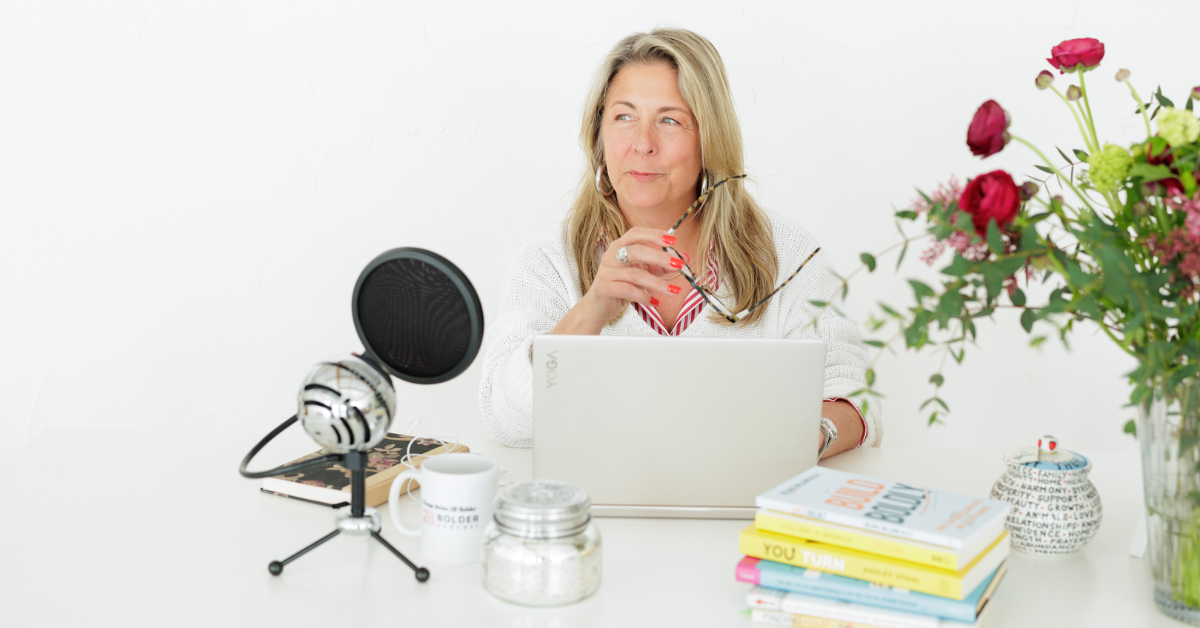
For this edition of Innovator’s Hangout, meet Mary Killelea, the powerhouse behind 2B Bolder, a digital-first platform and podcast helping women in business and tech own their voice, build visible personal brands, and take bold steps forward. After more than two decades in marketing, including nine years at Intel, Mary made the leap to entrepreneurship and scaled what started as a passion project into a thriving content and coaching business. She’s proof that with smart strategy, a fearless mindset, and a strong community, you can pivot, grow, and stay relevant all while empowering others to do the same.
1. You made a huge pivot from a long corporate career to building your own digital-first platform. What gave you the confidence to take that leap, and what was the biggest mindset shift you had to make?
Honestly, the confidence didn’t show up first, I had to take action before I fully felt ready. After nearly a decade at Intel and over 16 years running a marketing agency, I realized I was craving more autonomy and deeper impact. What really pushed me was this desire to create something that felt fully aligned with my values and strengths, something that supported women the way I wish I had been supported earlier in my career.
The biggest mindset shift? Letting go of the idea that success had to look a certain way. In corporate, I was used to structure, titles, and big teams. But when you build your own platform, you’re wearing all the hats at first. I had to stop waiting for permission or perfection, and instead trust my ability to figure things out and lead from a place of purpose, not just performance.
2. 2B Bolder started as a side project and grew into a full-fledged brand with multiple revenue streams. What were the first steps you took to make that growth possible?
The first step was simply starting. From the beginning, I felt strongly about amplifying women’s voices and making their paths visible to others. But as someone who’s always loved marketing, I couldn’t help but start seeing patterns and opportunities. I listened a lot to my audience, to the guests, to what topics sparked the most engagement. That’s when I began to shift from a passion project to a strategic brand.
I started asking myself, “How can I repurpose this?“ What’s the next touchpoint in the customer journey? Where are the monetization opportunities? That’s the marketer in me, I love connecting the dots between value and visibility. I began building systems around what I was creating, and that allowed me to layer in different offerings, including LinkedIn profile audits, visibility coaching, digital products, workshops, and templates. Each one met my audience at a different point in their journey, and each one supported my mission of helping women show up, speak up, and stand out.
As a business owner, especially in uncertain economic times, I’ve learned how important it is to diversify. I don’t believe in putting all your eggs in one basket. My obsession with monetization isn’t just about making money; it’s about building something sustainable that can adapt, scale, and truly serve. And today, with tools like AI, your ability to test, create, and get to market with a new idea is faster than ever. That speed and flexibility are game-changers if you know how to harness them.
Growth happened because I treated 2B Bolder like a real business, even when it still felt like a side hustle. I leveraged my marketing background, stayed focused on my audience, and kept asking, ‘How can I deliver more value, more efficiently?‘ That’s what turned a podcast into a multi-revenue brand.
3. You’ve built a niche audience of women in business and tech. How did you figure out exactly who you wanted to serve and what content would resonate with them?
 In the beginning, I didn’t have a perfect persona mapped out, I just had a gut instinct and a clear purpose. I knew I wanted to serve ambitious, driven women in business and tech who were often overqualified but under-recognized. So instead of trying to define them on paper, I started creating and paid close attention to what sparked interest, questions, and conversation.
My background in marketing taught me the power of testing and iterating. So I treated my content like a feedback loop—posting on LinkedIn, trying new podcast formats, testing blog headlines, and seeing what landed. I used engagement data the same way a product marketer would: not just to track clicks, but to understand unmet needs. I didn’t assume I knew what they needed; I listened until it became obvious.
What I’ve learned is that women don’t want fluff. They want real tools, real stories, and tactical ways to build credibility, visibility, and momentum. That’s why my content centers on career visibility, confidence, and brand building, especially on platforms like LinkedIn, where so many women hesitate to show up boldly.
The niche wasn’t something I narrowed down; it revealed itself. And as I built trust and community, I kept asking, What’s the next step she needs to take? That’s guided every offer, every post, and every pivot since.
4. A lot of professionals struggle with showing up consistently online. What are your top tips for staying visible on LinkedIn without feeling overwhelmed or fake?
This comes up all the time with the women I work with, and I totally get it. The pressure to show up online can feel overwhelming, especially when you’re already busy or worried you’ll come across as inauthentic or self-promotional. But here’s the truth: visibility isn’t vanity. It’s a strategy.
For me, it starts with clarity. Know what you want to be known for. You don’t need to post about everything; just focus on the few core themes that align with your expertise and the impact you want to make.
Second, build a system that works for you. I’m a big believer in batching content, using AI tools to brainstorm ideas or repurpose content, and creating a simple routine you can actually stick to. Even just showing up two days a week with intention is more powerful than going all in and burning out.
And finally, drop the pressure to be perfect. Some of my best-performing posts have been the most casual, honest ones. People connect with people. You don’t have to sound like a thought leader, you just have to sound like you. Share what you’re learning, what you’re seeing, what you care about. That’s what builds trust and makes people lean in.
So, if you want to stay visible without the overwhelm, simplify your message, systematize your process, and remain human. That’s what works, and what lasts.
5. You help women craft strong personal brands. What’s one mistake you see most people make when trying to stand out online?
The biggest mistake I see? People trying to sound like everyone else, especially when they’re trying to stand out.
They water down their message, use vague corporate buzzwords, or post what they think they should say instead of what actually reflects who they are and what they believe. And I get it, it feels safer that way. But in trying to be “professional,” they lose their edge, their voice, and the very thing that makes them memorable.
Your personal brand should feel like you, not a job description or a polished resume. The goal isn’t to impress everyone, it’s to connect with the right people. And that happens when you’re clear, consistent, and courageous enough to show up as yourself.
When I work with clients, we focus on uncovering their true differentiators, their point of view, their story, and their values, and then build from there. Because you can’t own your voice if you’re still trying to fit someone else’s mold.
So if you’re trying to stand out online? Drop the mask. Be specific. Be bold. And stop hiding behind buzzwords.

6. You’ve mentioned using AI tools to scale your work without burning out. Can you share a few practical ways early-stage founders can do the same?
AI has become my secret weapon for staying productive without burning out, and I think early-stage founders have to embrace it if they want to move fast without sacrificing quality.
Here are a few practical ways to start:
- Content creation: Utilize tools like ChatGPT to brainstorm post ideas, draft initial content, or repurpose long-form content into concise, snackable LinkedIn or Instagram posts. It won’t replace your voice, but it gives you a jump start, and that’s half the battle.
- Customer research: AI can help you summarize survey results, analyze patterns in testimonials, or even simulate your ideal customer’s objections so you can refine your messaging.
- Marketing systems: Use AI to write nurture emails, outline landing pages, or create messaging frameworks that you can plug into templates, especially helpful if you’re a solo founder wearing all the hats.
- Time-saving tasks: From drafting proposals to summarizing meeting notes, AI can take repetitive, mental-load-heavy tasks off your plate so you can focus on vision and growth.
I always say: Let AI be your co-founder, not your crutch. It’s not about replacing your thinking, it’s about accelerating it. The real magic happens when you bring your clarity and strategy to the table, and let AI take care of the first 60%.
Founders are spread so thin; they need better tools. And AI, used well, is a massive unlock for scaling smarter.
7. Looking back, what’s the boldest decision you made that truly changed the game for you and 2B Bolder?
Looking back, the boldest decision I made was betting on myself, not just emotionally, but financially as well. I stopped treating 2B Bolder like a side project and started approaching it like a real business. That shift changed everything.
It meant investing in systems, branding, tools, and mentorship, before I felt 100% ready or before the revenue matched the risk. But I knew that if I wanted to build something sustainable and impactful, I couldn’t wait for perfect timing. I had to go first.
That decision forced me to level up how I thought about strategy, monetization, and scalability. I became obsessed, in a good way, with understanding my audience, creating value-driven products, and building multiple revenue streams. And I started trusting that my corporate experience, marketing background, and creative instincts weren’t just “nice-to-haves”, they were my edge.
It was scary, yes, but also incredibly empowering. Betting on myself taught me that bold moves don’t guarantee success overnight, but they do build momentum. And for me, that momentum has opened doors I never expected, from speaking gigs to new partnerships to building a platform that truly supports other women.