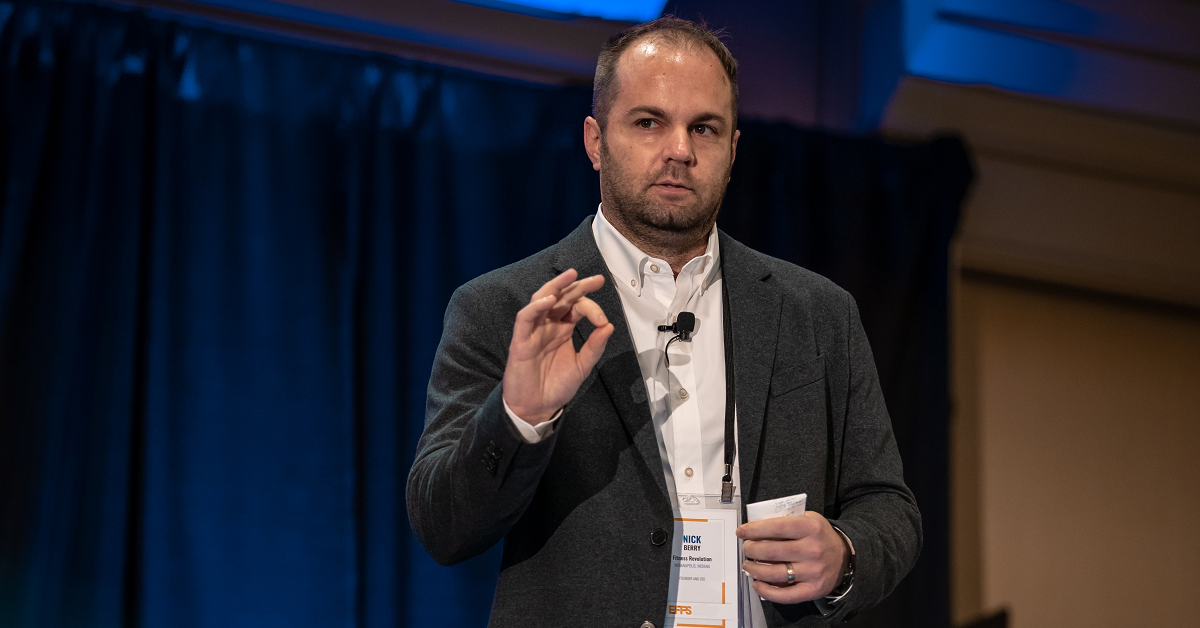
In this edition of Innovator’s Hangout, meet Nick Berry, an entrepreneur, business advisor and author with over two decades of experience building and scaling digital-first businesses. From bootstrapping his first info product venture to transforming it into a national franchise with over 200 locations, Nick knows firsthand what it takes to navigate pivots, build resilient ecosystems and grow sustainably without outside capital.
Recognized by Inc5000, Entrepreneur Magazine and Franchise Business Review, Nick’s companies have earned awards for growth, franchisee satisfaction and workplace culture. After multiple exits, he now coaches founders through his Business Owner’s Journey podcast and newsletter, sharing the real lessons behind sustainable growth, leadership and business design.
In this conversation, Nick pulls back the curtain on building in-house teams, pivoting at critical moments, reinvesting for smart growth and shortening the learning curve for entrepreneurs ready to scale with confidence.
You’ve built and exited multiple businesses over 20 years. When you look back at your first digital-first venture, what early decision had the biggest long-term impact on your success?
Deciding to build the business around recurring revenue. We were doing a few things that were innovative at the time, and creating recurring revenue streams was one of them in the industry we were in. This was before recurring revenue was a popular phrase.
I realized early that if you want predictable growth, you need predictable revenue. That pushed me to focus on products and services people would come back for month after month. It also made every other problem easier to solve, because when you have a base of loyal customers, you get stability, feedback, and room to experiment. It forces you to stay focused on creating value and retaining customers moreso than when you have to be consumed with making another sale.
Many founders hit a wall at some stage. What did you learn from pivoting your franchise model and how did you know it was the right time to shift?
 Every business hits a ceiling. The trick is knowing whether it’s a temporary setback or a structural “design problem.” When we hit that wall with our franchise, it was clear that what got us there wasn’t going to get us to the next level. We were in a hamster wheel and had reached the top speed we could run in it. We were going to have to find a different way to speed up, something more like a ten-speed bicycle where you can shift gears and as you go faster it actually gets easier.
That’s what prompted me to create the Business Alignment System™, my strategic framework for knowing exactly which systems and mindsets need to evolve at every level. The wall is often just a signal that the playbook that got you here is now holding you back.
The right time to shift is when you realize your existing playbook is holding you back more than it’s helping. That’s when you have to retool, even if it’s uncomfortable.
You bootstrapped every step, even as you scaled nationally. What are some creative ways you found to fuel growth without taking on debt or outside capital?
Bootstrapping forces you to get creative with cash flow. Recurring revenue helped a lot, and I focused on building win-win partnerships with vendors, customers, and even team members who had skin in the game. We pre-sold products, bundled services, and weren’t afraid to experiment with new offers if it meant bringing in upfront cash.
We moved fast and found ways to leverage our existing client base. We did a lot of co-creation of new solutions, with other creators and with our clients. That’s organic fuel for growth, and it costs far less than advertising or debt.
You talk about building ecosystems before the “creator economy” was a trend. What role did community and peer groups play in scaling your businesses?
The community we built wasn’t just a group of people who we had done business with. We had a strategy that we built our community around that I call the “three lifelines”, and I talk about this all the time on the Business Owner’s Journey podcast. I believe that every business owner needs a personal coach or mentor, a big, broad community, and a small, tight-knit peer group. They each play separate roles. The one-on-one coach provides dedicated expertise and deep familiarity with you and your business, the big community gives you exposure to a larger network of people, ideas and trends, and the peer group gives you a smaller group of people you have a lot more in common with who are there for accountability and honest feedback. Our business was able to nurture clients through each of those ‘lifelines’, so it had a bit of a network effect. Not to mention it kept clients from drifting away to other solutions.
And at the same time, I was using all three of those lifelines for my own development and support – which is actually what convinced me that everyone needed each of the three lifelines. I’ve had a dedicated coach for almost 15 years, am and have been a part of many peer advisory boards, including Vistage for 10 years, and have always been involved in larger industry communities as well. I always practice what I preach when it comes to learning and developing as a business owner and leader. Those relationships led to partnerships, early hires, and even helped me see blind spots I would’ve missed on my own.
The early days of digital-first businesses can be messy and uncertain. How did you balance learning to lead with architecting systems for scale?
You have to accept that it’s going to be messy. In the beginning, leadership is about keeping your own head on straight and learning to communicate what matters most. I always tried to be one step ahead, documenting what was working, even as I was figuring it out.
When you focus on building systems for today’s problems AND for where you want to go, you set the foundation for scale. Capture and iterate. Capture and iterate.
Once I recognized the pattern it became easier to do, and that’s really when I had my revelation about The 5 Stages of the Business Owner’s Journey. There are consistent patterns that businesses go through, and if you’re aware of them then you know what competencies you’ll need before you desperately need them.
Every business is really two things: what it is now, and what it’s becoming.
 Now as an advisor and host of The Business Owner’s Journey, what do you see as the biggest blind spot that holds many founders back from sustainable growth?
There’s always some story or belief that we’re telling ourselves that’s getting in the way of progress.
The biggest blind spot is believing you have to do it all yourself. Founders often think grit will solve everything, but grit without systems just leads to burnout.
The second is not knowing when to step back and let the business outgrow you. Too many business owners stay stuck in “operator mode,” when the real breakthrough comes from building a leadership team and letting go of the need to control every detail. Sustainable growth requires alignment between vision, team, and systems. It’s not a game for heroes.
For entrepreneurs bootstrapping today, what mindset shifts or habits do you believe are non-negotiable for staying resilient and building a business that lasts?
First, embrace the long game. Overnight success is a myth, and lasting businesses are built on steady progress.
Second, become obsessed with learning from everything you can – from your team, your customers, and your mistakes. That means be perceptive and a good listener. And yes you can work on it.
Third, surround yourself with people who will tell you the truth, not just what you want to hear. This is hard to do, but you’ve got to make it happen. Every truthteller you can find multiplies your capabilities. Not many other assets do that.
And finally, make decisions based on where you want to be, not just where you are now. Resilience comes from knowing setbacks are just data, not dead ends.