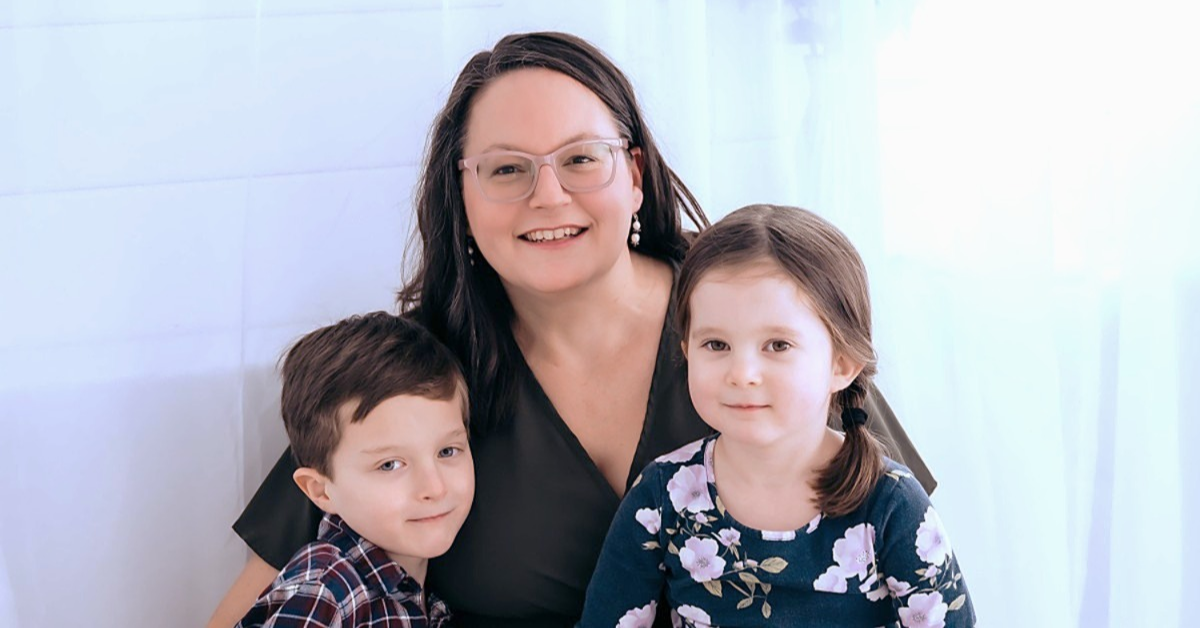
Today, we’re highlighting the inspiring journey of Paulina S. Cossette, PhD, a former US politics professor who walked away from academia in 2019 and never looked back. What started as a leap into freelance academic copy editing has blossomed into a six-figure business and a growing community where Paulina teaches other academics how to build editing and coaching businesses of their own. Through scrappy outreach, smart SEO, and a lot of grit, Paulina’s story is proof that you can pivot, grow online, and design work that aligns with your values, all while working fewer hours and having more time for life.
You left a traditional academic path to build your own business. What was the moment you knew you couldn’t stay in academia anymore?
In 2019, my son was almost a year old and I was working seven days a week. I had been unhappy in academia for a few years. Despite changing schools, the same problems persisted: stagnant pay, burnout, student plagiarism, and 5-hour-long faculty meetings that accomplished nothing. My husband and I were living far from family and knew that we wanted to raise our children back home in Maine. During the summer of 2019, the thought of teaching again in the fall made my stomach churn. That’s when I knew I had to make a change.
Starting out as a freelance editor must have felt daunting. How did you land your first paying clients?
 I started out freelancing for academic editing agencies and publishers. The thought of owning a business was terrifying; I never dreamed I would ever have the confidence to take on my own private clients and be an entrepreneur. But after a few years of being paid peanuts as an independent contractor for these other companies, I knew that attracting private clients was the path to real money. I wrote to university thesis offices and asked them to add me to their Electronic Thesis and Dissertation (ETD) lists. I also sent hundreds of cold emails to faculty around the US. My first clients were grad students who saw me on their school’s ETD list and faculty who responded to my cold emails. I was very nervous but ecstatic to see how quickly the business grew.
Many freelancers dream of turning their work into scalable offers. How did you go from 1:1 editing to launching your course and group coaching program?
In early 2024, I started to bring in my first $10k months. I felt like I had cracked the code on marketing, and I started to get more client requests than I could handle. I knew I didn’t want to start an editing agency and supervise other editors, so the only other option to scale was to launch a course. Around this time I heard a podcast interview with Rory Vaden, a personal branding expert. He talked about how the best business you can start is one where you teach people how to survive an experience or challenge you’ve lived yourself—and then thrive when they come out the other side. I had been thinking a lot about how many academics are so unhappy, just like I was, and have no idea what else they can do for a career—just like I had felt. I knew this was my opportunity to use my story and everything I had learned to help other people find joy again. I launched the first cohort of Becoming an Academic Editor in July 2024. We had 16 people enrolled. A year later, over 65 people have joined and are building editing and coaching businesses on their own terms—with many booked-out within 1-2 months of completing the program.
You’ve grown your audience using SEO, cold outreach, and social media. What channel has been the biggest driver of your community growth so far?
For my editing work, the most successful tools to attract clients have been cold emails to faculty and SEO (through blog posts that I share on my website, as well as on Medium and Reddit). For my coaching program, most people find me on LinkedIn and then learn more about me through my podcast, Leaving Academia: Becoming a Freelance Editor. I think it’s crucial to get your name in front of as many ideal clients as possible, and then have a nurture tool (like a podcast and/or email list) where they can get to know you and your personality and style.
Balancing business and family life is a huge theme for you. How have you structured your weeks to work just 25–30 hours without sacrificing income?
This was definitely tough to navigate early on. I think what makes me most successful is prioritizing the most important work. One of my mentors, Frenchie Ferenczi, says “Stay close to the money.” For me, this means spending time on: 1) bringing in new leads, 2) nurturing them through the podcast and live webinars, and 3) closing the deal by getting hot leads to enroll in my program. I outsource anything else—research, podcast pitches, social media content—to my fabulous VA, Verushka Byrow, and I focus on these three things that are most important. This lets me quit work at 1:30 every day and spend the afternoons and weekends focused on myself and my family.
What’s the biggest mindset shift you had to make when you went from employee (professor) to business owner?
When we’re in academia, we’re constantly being criticized. Your anxiety is through the roof because you’re always waiting for the next shoe to drop. You brace yourself for negative critiques and even abusive behavior from students and colleagues. Years of dealing with this really does a number on your self-confidence. So I’d say that the biggest shift for me (and for many people in my program) is realizing that I really am smart, strong, hardworking, and highly capable. Running an online business isn’t as difficult as you think. If you’ve survived academia, you’re creative, highly intelligent, and persistent. Those are the exactly qualities you need to be successful in business.
For other academics who feel stuck or burned out, what’s one piece of advice you’d give them if they’re considering stepping off the traditional path?
Think about what work truly brings you joy, and make a plan for how you can start bringing in income while doing that work. Connect with other people who’ve left academia; chat with them on LinkedIn, Instagram, whatever. Stop being so scared to live your life. One day, you’ll be on your deathbed (as will we all); what do you think you’ll be worried about then? Whether your department chair is disappointed that you quit? Or whether you lived a full life that allowed you to be who you are, to travel freely, to spend time with the people you love? I know what my answer is.
Thank you, we greatly appreciate the time you spent on this.
Thank you so much for having me!